Strong boards do not rely on instinct alone. They rely on data. Quarterly reporting cycles are not just for financial results. They are an opportunity to assess whether governance structures are functioning as intended.
Understanding the broader importance of corporate governance helps frame this discussion. Governance is not abstract. It can be measured, monitored, and improved.
The question is not whether boards should track metrics. The question is which ones truly matter.
Why Quarterly Governance Tracking Matters
Quarterly review creates rhythm and accountability. Annual evaluations are useful, but too infrequent to identify emerging problems.
Tracking relevant metrics every quarter helps boards:
Detect risk trends early
Strengthen oversight of management
Improve transparency for stakeholders
Support long-term strategy with reliable indicators
The aim is focus, not volume. Too many indicators dilute attention.
1. Financial Oversight Indicators
Boards must monitor financial stability beyond headline revenue.
Key quarterly metrics include:
Revenue growth rate compared to forecast
Operating margin trends
Cash flow from operations
Liquidity ratios and debt levels
Variances from approved budgets
These metrics confirm whether management execution aligns with strategy.
Boards should also track unusual movements. A stable revenue number may hide margin compression or rising costs.
2. Risk and Compliance Metrics
Risk oversight is one of the board’s core duties. Quarterly updates should move beyond generic risk lists.
Useful governance metrics include:
Number of high-risk items above tolerance levels
Regulatory breaches or investigations
Internal audit findings by severity
Cybersecurity incidents and response times
Whistleblower reports and resolution status
These indicators show whether controls are effective in practice.
A rise in moderate issues across several departments may signal systemic weaknesses, even if no major breach has occurred.
3. Strategic Performance Indicators
Governance is not limited to control. It includes ensuring the company delivers on strategic objectives.
Boards should review quarterly metrics linked directly to approved strategy, such as:
Market share movement
Customer retention and churn rates
Progress against digital transformation goals
Research and development milestones
Major project delivery timelines
Each strategy pillar should have measurable outcomes. If strategy cannot be measured, it becomes difficult to govern.
Boards should ask whether short-term financial pressure is undermining long-term positioning.
4. People and Culture Metrics
Corporate failures often stem from cultural weaknesses rather than financial misreporting.
Quarterly governance reporting should include:
Senior management turnover
Succession planning readiness
Employee engagement scores
Diversity and inclusion indicators
Training and compliance completion rates
Sudden leadership exits or falling engagement trends deserve attention.
Culture indicators help the board assess whether values and conduct align with formal policies.
5. Board Effectiveness Measures
Governance metrics should also examine the board itself.
Quarterly review can include:
Attendance rates
Completion of mandatory training
Timeliness of board paper circulation
Follow-up completion rates on board decisions
An annual board evaluation remains essential, but interim indicators reveal operational discipline.
If board materials consistently arrive late or discussions repeatedly exceed allocated time, governance quality is affected.
How to Avoid Metric Overload
Boards sometimes attempt to monitor everything. The result is long dashboards that few people analyse deeply.
To maintain focus:
Limit core governance metrics to a concise dashboard
Link every metric to a specific oversight responsibility
Highlight exceptions rather than stable trends
Use consistent definitions quarter to quarter
Clarity supports better discussion.
Turning Metrics into Decisions
Metrics alone do not improve governance. Action does.
Each quarterly review should lead to clear outcomes, such as:
Requesting deeper analysis on emerging risks
Adjusting strategy targets
Mandating internal control improvements
Reviewing executive performance metrics
If data is presented but not discussed, oversight weakens.
Boards should ensure meeting agendas allocate protected time for governance review. Financial performance often dominates attention, but governance indicators deserve structured discussion.
A Practical Framework for Quarterly Governance Review
A simple structure can guide quarterly oversight:
Financial performance versus plan
Key risk changes and compliance status
Strategy execution metrics
Culture and leadership indicators
Board effectiveness updates
This framework keeps governance aligned with both performance and accountability.
Final Thoughts
Governance metrics are not a compliance exercise. They are a strategic tool. When boards track the right indicators consistently, they gain visibility into financial health, operational risk, and organisational resilience.
Quarterly discipline builds long-term confidence. Investors, regulators, and employees expect boards to exercise informed oversight.
By focusing on meaningful metrics rather than excessive reporting, boards strengthen decision-making and reinforce accountability at every level of the organisation.
The first day external reviewers enter your data room is when every weak folder name, sloppy permission, and missing file is exposed. For teams running M&A, fundraising, audits, or partner diligence, that moment can accelerate confidence or stall a deal. We see the same patterns: rushed builds, unclear ownership, and security settings that leave risk on the table. If you worry about oversharing sensitive docs, confusing index structures, or a last-minute scramble, you are not alone.
Getting setup right matters for speed and trust. A clean structure shortens due diligence timelines, reduces back-and-forth Q&A, and shows that your compliance posture is real. It also reduces breach risk and the downstream cost of errors. According to the IBM Cost of a Data Breach 2024 report, the global average breach cost rose again in 2024, driven by detection delays and access misconfigurations. Strong configuration and governance in your virtual data room (VDR) can help prevent those issues.
Why data rooms go sideways at go-live
Before we fix problems, let’s name them. Most go-live troubles stem from a few root causes:
Ambiguous scope and ownership across legal, finance, HR, and IT.
No agreed taxonomy or naming standards, leading to duplicate or orphaned files.
Over-broad permissions that expose sensitive content to the wrong eyes.
Missing compliance controls such as watermarking, download restrictions, and logging.
Insufficient dry runs, so reviewers encounter broken links or absent documents.
No Q&A workflow, causing email sprawl and inconsistent answers.
Human error is a major risk amplifier. The Verizon Data Breach Investigations Report 2023 found the human element played a role in most breaches, highlighting why least-privilege access and simple workflows are essential in diligence settings.
The steps to set up a Virtual Data Room that prevent chaos
The fastest way to a clean launch is to tackle structure, security, and stakeholder alignment in a deliberate sequence. Below is a pragmatic approach you can use with platforms like Ideals, Intralinks, Datasite, Firmex, Ansarada, or DealRoom.
Step 1: Define scope, timeline, and stakeholders
Decide the deal perimeter and who is accountable for each workstream. Assign a lead for legal (contracts, IP), finance (financials, forecasts), HR (employee matters), product (tech docs, roadmaps), and IT/security (access, SSO, audit logs). Clarify whether the room will support multiple bidder groups or one buyer, and whether you will stage disclosures in phases.
Owner model: One accountable lead per folder tree.
Risk rating: Classify content by sensitivity to drive permission patterns.
Step 2: Create a clear index and naming convention
Build a single source of truth for the folder tree before uploading. Use a familiar M&A or audit taxonomy so reviewers find what they expect. Enforce naming rules such as “YYYY-MM-DD_DocumentName_Version” for versioned items, or “Company_Department_DocType” for static materials. Avoid deep nesting beyond four levels; most VDRs render better with a shallow, consistent hierarchy.
Pro tip: mirror your index in a spreadsheet that includes folder path, owner, sensitivity level, and upload status. Use it to track progress and support audits later.
Step 3: Establish a security baseline early
Decide your identity model and controls before any external invitation goes out. Configure single sign-on (SSO) with Okta, Azure AD, or Google Workspace if your platform supports it. Enforce multifactor authentication, strong session timeouts, and at-rest plus in-transit encryption. Enable watermarking and disable printing or downloading for sensitive areas until late-stage diligence demands otherwise.
Map content sensitivity to roles. Most VDRs allow role-based groups with fine-grained folder or document permissions. Use the principle of least privilege with buyers, lenders, auditors, and advisors. For competitive processes with multiple bidders, isolate each bidder’s Q&A and upload areas. Keep an “exec-only” or “legal-restricted” corner for materials like draft SPA, privileged counsel memos, and individual compensation data.
Document the exceptions. If a bidder gets access to a sensitive folder, record who approved it and why. This record becomes part of your audit trail.
Step 5: Prepare the content pipeline and quality gate
Set a validation step between upload and publish. Many platforms support staging areas where internal teams can upload files that remain invisible to external users until approved. Require a “Ready for Review” flag and perform quality checks for redactions, completeness, and correct metadata.
Redaction: Use built-in tools or Adobe Acrobat for personal data and secrets.
Watermarking: Enable dynamic watermarks with user identification and timestamp.
Document types: PDFs for final reference, spreadsheets locked to view only if possible.
Search metadata: Fill document titles and tags for reliable search results.
Step 6: Configure and test Q&A
Q&A is the heart of diligence. Turn on moderated Q&A with topic categories mapped to owners. Require bidders to search existing answers before asking new ones. Set SLAs by category so legal and finance questions do not wait behind minor administrative queries. Tools from Ideals, Intralinks, Datasite, Firmex, and Ansarada include built-in Q&A queues and private questions per bidder.
Step 7: Run a dry launch and audit your logs
Invite a small internal reviewer group that represents external roles. Test sign-in, folder visibility, search, watermarking, download restrictions, and Q&A. Review audit logs for anomalies such as unexpected permission inheritance, missing MFA, or disabled watermarking in restricted areas. Only after this pass should you send the first external invitations.
Common mistakes and the fixes that prevent delays
Mistake 1: A vague or overly deep folder structure
Symptoms: Reviewers get lost, ask for files you already uploaded, or rely on search that returns duplicates.
Fix: Freeze an index aligned to standard M&A or audit checklists and limit depth to three or four levels. Keep sensitive documents isolated in well-labeled folders like “Legal/Privileged” and “HR/Compensation”. Use a controlled naming convention for clarity.
Mistake 2: Over-broad permissions that expose sensitive content
Symptoms: Users without a need-to-know can view HR or legal documents. Bidders see other bidders’ questions.
Fix: Implement least privilege with role-based groups. For multi-bidder processes, create separate groups per bidder and apply explicitly distinct Q&A queues. Regularly run a “permissions review” report and remove access not tied to a current deal stage.
Mistake 3: Skipping compliance and governance basics
Symptoms: No watermarking, downloads allowed by default, missing SSO, or weak password rules.
Fix: Enforce watermarking, disable printing and downloads unless required, and set MFA plus SSO from day one. Map your controls to standards like ISO 27001:2022 for access and asset management, and keep evidence of your control design and operation.
Mistake 4: Ignoring data hygiene and redaction
Symptoms: Personal data appears unredacted, or spreadsheets reveal hidden tabs and formulas.
Fix: Institute a redaction checklist and a publish gate where a second person verifies PII masking and hidden-content removal. Convert sensitive spreadsheets to PDF for read-only access when appropriate, or restrict to online view with disabled downloads.
Mistake 5: Relying on email for Q&A
Symptoms: Inconsistent answers, lost context, and accidental disclosures across bidder groups.
Fix: Use the platform’s Q&A module with category routing, SLAs, and private bidder channels. Assign a Q&A moderator who consolidates duplicate questions and ensures answers are vetted by subject-matter owners.
Mistake 6: No dry run or go-live rehearsal
Symptoms: Broken links, wrong permissions, users unable to sign in, or missing critical documents discovered by bidders.
Fix: Rehearse with an internal “mock bidder” group. Validate login, search, watermarking, link integrity, and role visibility. Review the audit log to confirm the platform is capturing access as expected.
Mistake 7: Mixing draft and final documents
Symptoms: Reviewers cite outdated versions or comment on revisions that are not final.
Fix: Create a “Drafts – Internal Only” area and a “Finals – External” area. Mark finals with a version label and date. On platforms that support versioning, publish a single document with controlled versions rather than duplicate files.
Mistake 8: No plan for updates or staged disclosure
Symptoms: Chaotic updates mid-process, surprises to bidders, and rework in Q&A when new docs arrive.
Fix: Adopt a staged release plan. Announce a weekly or biweekly update cadence with a changelog folder. Use notifications to alert bidders to new materials without spamming.
A pre–go-live checklist you can copy
Index approved: Folder tree, naming convention, and sensitivity labels finalized.
Security baseline: SSO configured, MFA enforced, watermarking on, downloads restricted where needed.
Permissions mapped: Groups by role or bidder, with least privilege applied and exceptions documented.
Content pipeline: Staging area active, redaction process defined, and publish approvals configured.
Q&A enabled: Categories, owners, SLAs, and moderator assigned.
Dry run complete: Internal reviewers validated sign-in, visibility, and search; issues resolved.
Audit-ready: Logs enabled, index tracker updated, and a changelog folder created.
Governance artifacts to prepare
These documents keep your team aligned and demonstrate control maturity to reviewers:
Index tracker spreadsheet with owner, sensitivity, and publish status.
Permission matrix mapping roles to folders, with exception log.
Redaction checklist covering PII, trade secrets, and legal privilege.
Q&A playbook outlining categories, SLAs, and escalation paths.
Change management log for weekly releases and version notes.
Incident response note for the room itself, including who to contact if access issues or suspected leaks arise.
Platform tips and configuration patterns
Watermarking and document controls
Enable dynamic watermarks including user name, email, IP, and timestamp. For highly sensitive files, disable printing and downloads. Datasite, Ideals, Intralinks, Firmex, and Ansarada all offer flexible controls. Use them to align with your sensitivity labels.
Identity and SSO
Connect Okta or Azure AD for centralized user lifecycle management. This lets you revoke access instantly when an engagement ends or a user departs. For advisor firms that cannot use your SSO, enforce MFA and strong password policies.
Search and metadata hygiene
Populate document titles and descriptions. Many VDRs provide optical character recognition for scanned files; still, a clear title beats relying on OCR alone. Test search with common diligence queries like “lease,” “IP assignment,” or “SOC report.”
How to communicate updates without chaos
Transparency earns trust and reduces repeated questions. Publish a “What’s new this week” note in a dedicated folder. Include a short table of changes, the folders affected, and any implications. Keep notifications concise and link to the changelog rather than spamming multiple files.
Security, compliance, and why it matters to the deal
Bidders and auditors evaluate not only your financials but also your operational discipline. A room that demonstrates least privilege, strong identity management, and auditable workflows is a signal of overall governance. It is also a hedge against incident costs. The IBM Cost of a Data Breach 2024 report notes that organizations with mature security automation and incident response save significant amounts compared with those without. Your VDR is a visible part of that maturity story.
Training and change management
Do not assume external users understand your platform or your taxonomy. Offer a two-page “how to use this room” guide and a five-minute video walkthrough. Internally, train content owners on the publish gate, redaction standards, and Q&A etiquette. Align the team on response times and what requires legal review.
Troubleshooting quick answers
Slow uploads: Pre-convert large files to compressed PDF, and avoid uploading massive raw archives.
Reviewers cannot find documents: Add cross-links in an “Index” folder pointing to common areas like “Financial Statements” or “Material Contracts.”
Permission errors: Use the platform’s permission report view to spot inherited access and correct it at the nearest parent folder.
Version confusion: Lock old versions and maintain a single “Current” copy in the finals area.
If you need to move fast
When timelines are tight, prioritize a minimal viable room: financial statements, cap table, key customer contracts, IP assignments, and major HR policies. Stage additional content weekly. This approach keeps control while showing steady progress. If you are comparing platforms, look for strong Q&A, flexible permissions, and performance with large PDFs. Reviews of the Best Virtual Data Room Providers in Singapore can also help you shortlist options suited to regulated markets and cross-border deals.
Bringing it together
You do not need a sprawling playbook to launch well. You need a practical order of operations and a few guardrails that keep the room clean, secure, and fast. Follow the steps to set up a Virtual Data Room in a structured way: align stakeholders, finalize your index, lock down identity, build least-privilege groups, enforce a publish gate with redaction checks, turn on moderated Q&A, and rehearse before the first invite. These practices help you avoid last-minute chaos and signal operational excellence to counterparties.
Handled well, your VDR accelerates the deal rather than hindering it. It reduces repetitive questions, contains sensitive data, and earns confidence from first click to close. That is what a high-functioning diligence engine should deliver.
A Fresh View Of the Data Rooms for the Manufacturing Companies
A few decades ago, the physical data rooms were the only solution for the manufacturers. The images, audio, and videotapes have to be stored physically. Yet in today’s highly intensive competition, the VDR technological integration improves the company’s efficiency.
A virtual data room (or VDR) in the manufacturing innovation that provides the cloud-based working space for the company. In essence, the virtual data rooms allow achieving restricted access to the information for collaboration, viewing, editing, and using the information or files.
The Digital Shift in Manufacturing
Nowadays, it’s impossible to imagine the effective data management of documents, audio, and video files between the supplier and manufacturer without the proper digital transformation.
That’s why, the basic premise of the transformation in the manufacturing sector is the growing necessity to improve supplier-manufacturer exchange and business relationships via secured and reliable VDR solutions.
Understanding Virtual Data Rooms
Although, depending on the vendor, there are differences in the virtual data room features, some of them are universal for the VDRs. These universal features are:
Sharing with the data across the authorized company’s staff;
Project management for tracking the processes;
Collaboration enhancement through restricted access to the files;
Secure data storage via a two-step authentication procedure.
However, there’s always the option of the customization for the VDR’s features, depending on the industry.
Benefits of Virtual Data Rooms in Manufacturing
The VDR operational efficiency is one of the main benefits of the solution. However, there are other kinds of benefits that CEOs are constantly looking for:
Supply chain management provides the viewing of supplier’s contracts, orders, records, and EHS documents;
Global partnerships through managing the supplier’s documentation. The access to the intellectual property security related to purchase orders, invoices, etc.;
The production process management includes the production schedules, quality control reports, production charts, other kinds of production-related information, etc.;
Distribution process management provides with the info like shipping, location, distribution, and information updates;
Quality control includes info on agreements, product features, equipment records, validation, etc.
These benefits collectively contribute to enhancing overall organizational effectiveness and competitiveness.
Implementing Virtual Data Rooms for Manufacturing Growth
The first goal of the implementation strategies through the shift from the physical to the virtual data rooms is to increase the staff’s productivity. For this purpose, the solution for the manufacturing company must stand on the grounds such as:
System integration must provide a short staff training curve;
The secured platform must provide instant access to the information;
The VDR must solve the company’s goals;
For more details, check this article on the pros and cons of the VDRs.
Case Studies in Manufacturing
Manufacturing companies benefit tremendously when moving to virtual data rooms, and there are plenty of industry examples of this. The case in point is the Acme corporation which has used the VDR as a tool to increase competitiveness by sharing the info with the suppliers such as financial information, business plans, product demos, etc.
The positive of the technology impact resulted in an increase in the information exchange between the company and suppliers and a better position in the market. And each day, there are more success stories come up because of the proper implementation of the VDR.
Conclusion
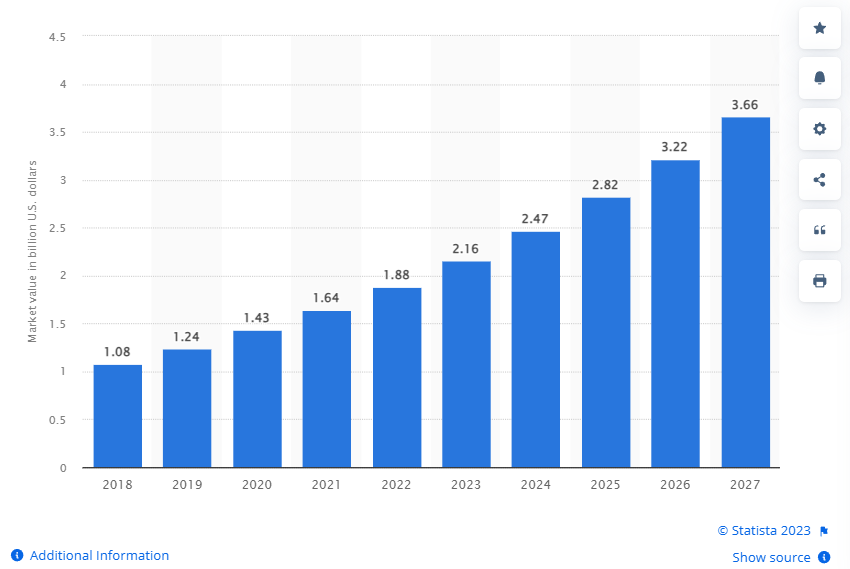
The future of manufacturing industry connected to the rapid shift to VDR technology. In terms of launching, maintaining, and updating, the VDR is drastically more cost-effective than the physical data rooms. Because of the competitive advantage that provides the VDR and a set of the digital tools, the VDR market anticipated to grow in the years ahead.
Optimizing Manufacturing Growth: The Critical Role of Secure Online Data Rooms
The modern world is experiencing a digital transformation, where information is becoming a valuable resource. Modern secure online data rooms use the most advanced protocols with the option of end-to-end encryption and dynamic code structure. Thanks to this approach, you don’t have to worry about high-quality and safe manufacturing growth. Moreover, this review will discuss important nuances of this process.
Challenges in Manufacturing Growth
The manufacturing industry confronts distinctive hurdles that significantly impact its growth trajectory. Two crucial challenges stand out: data security and fostering efficient global collaboration. These hurdles hold profound implications for the sector’s expansion and operational efficiency.
Data Security: Protecting sensitive manufacturing data against cyber threats and breaches remains a critical concern.
Global Collaboration: Coordinating operations across diverse global locations demands seamless communication and workflow integration.
As the landscape advances, addressing these manufacturing challenges becomes pivotal. Ensuring robust data security measures and enhancing global collaboration frameworks are indispensable for sustained growth, innovation, and competitive edge in the manufacturing sector.
What are Secure Online Data Rooms?
To begin with, we must clarify the data room definition and its features. This program provides tools for online work with documents, organizing meetings, and communicating at a distance. Secure online data rooms, pivotal in modern manufacturing, ensure secure data management and streamlined collaboration. These platforms employ stringent security measures, utilizing encryption and access controls to safeguard sensitive manufacturing data. Moreover, they offer tailored collaboration tools—real-time editing, Q&A sections, and task assignments—to facilitate seamless communication among global teams. As manufacturing operations expand globally, these data rooms serve as fortified centers, ensuring data security and enhancing collaboration across diverse teams, playing a vital role in supporting the industry’s growth and efficiency.
Benefits of Data Rooms in Manufacturing
Secure online data rooms revolutionize manufacturing processes by delivering unparalleled advantages.
Operational Efficiency: These rooms centralize data storage, enabling swift access to crucial documents, accelerating decision-making, and enhancing overall operational efficiency.
Intellectual Property Protection: Data rooms act as fortresses, securing confidential designs, patents, and sensitive information from unauthorized access or breaches, ensuring the protection of invaluable intellectual assets.
Streamlined Communication: Collaborative tools like real-time editing, task assignments, robust Q&A sections, and data rooms facilitate seamless communication among global teams. This fosters enhanced productivity, reduces miscommunication, and streamlines project management.
Secure data rooms are pivotal in fortifying operational processes, safeguarding intellectual property, and enabling seamless communication and collaboration within the manufacturing landscape, fostering innovation and growth.
Implementing Data Rooms for Manufacturing Success
Implementing data rooms in manufacturing involves strategic technology integration and focused workforce training to maximize their benefits. Integrating these solutions with existing processes ensures smoother adoption and utilization. Adequate employee training optimizes their proficiency in utilizing the data rooms, enhancing their efficiency in managing tasks and collaborating across teams. Efficient implementation strategies pave the way for streamlined operations and improved productivity in manufacturing environments.
Case Studies and Success Stories
Real-world applications of secure online data rooms have showcased profound impacts on manufacturing. In one case, a multinational manufacturing conglomerate streamlined its global operations by employing data rooms for enhanced collaboration, leading to a 20% increase in production efficiency. One of another success stories involves a mid-sized manufacturing firm that protected its intellectual property using these platforms, resulting in accelerated innovation and a 30% reduction in development cycles. These instances underscore the pivotal role of data rooms in fostering innovation and growth across the manufacturing industry impact.
Conclusion
The future of manufacturing hinges on technology adoption, where integrating innovative tools like secure online data rooms is pivotal. Embracing these technologies ensures a competitive edge and fosters sustainable growth. The dynamic manufacturing landscape demands efficient collaboration, stringent data security, and streamlined operations. Secure online data rooms cater to these needs, promising a future where technological advancements empower industries to thrive amidst evolving global challenges, shaping a more agile and competitive manufacturing landscape.
Welcome
Welcome to the Massachusetts Manufacturing Advancement Center, a leading resource for manufacturers, and partner with the MassMEP. MassMEP is the expert resource committed to manufacturing growth in Massachusetts.
MassMEP creates economic impact by transforming manufacturing enterprises and the manufacturing ecosystem. This is achieved through providing operational excellence, workforce development strategies and innovative growth initiatives, enhanced through leveraging strategic public/private relationships.